


Every tradition has its shadow. The deeper the wisdom, the more elaborate the distortions that grow up around it — because the language and framework of genuine knowledge is valuable currency, and not everyone who uses it is drawing from its authentic source.
In the Vedic tradition, the distinction between authentic spiritual practice and its distorted counterpart is not a modern concern. It is addressed directly and rigorously in the classical texts — in the Bhagavad Gita, in the Atharva Veda, in the Puranas, and across the entire Jyotish literature. The tradition knew, thousands of years ago, that its framework could be misused. And it created precise philosophical tools for distinguishing genuine practice from its degraded imitations.
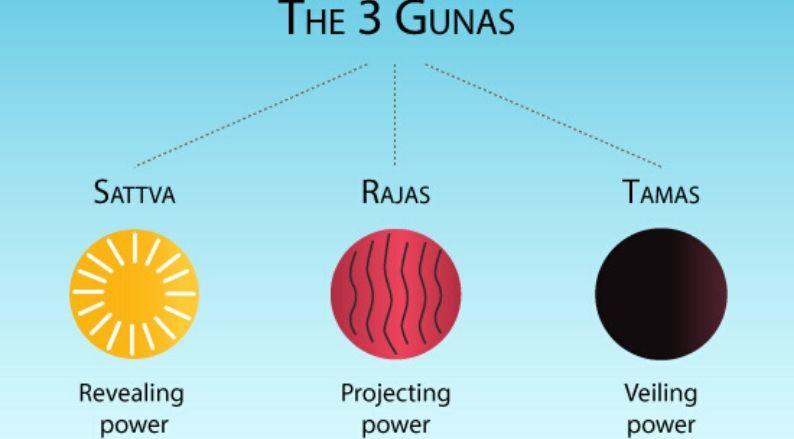
The most important of these tools is the concept of the three Gunas — Sattva, Rajas, and Tamas. Understanding this framework is the key to understanding what the Vedic tradition actually means by “Satvik Vashikaran,” why the authentic tradition categorically opposes what popular culture calls “Black Magic Vashikaran,” and how to tell the difference between the two in practice.
This article explains all of this clearly, honestly, and entirely within the framework of authentic Vedic astrology — with no supernatural claims, no sensationalism, and no agenda other than giving you the most accurate, classically grounded account of this distinction that can be written.
The Foundation: Understanding the Three Gunas
To understand the distinction between Satvik and Tamasic practice, you must first understand the Vedic concept of the three Gunas — because this is the philosophical framework within which the classical tradition draws every meaningful distinction between types of spiritual activity.
The Gunas are described in the Samkhya philosophical tradition — one of the six classical schools of Indian philosophy — and are extensively discussed in the Bhagavad Gita, particularly in Chapter 17 (Shraddhatraya Vibhaga Yoga) and Chapter 18 (Moksha Sanyasa Yoga). They represent the three fundamental qualities that pervade all of manifest existence:
Sattva (सत्त्व) — The quality of purity, clarity, harmony, light, and truth. Sattvic activity is characterised by sincerity, ethical grounding, transparency of intention, and alignment with Dharma (cosmic right order). It produces clarity of mind, emotional stability, and spiritual elevation in the practitioner.
Rajas (रजस्) — The quality of activity, passion, desire, and dynamism. Rajasic activity is driven by personal desire and the pursuit of specific outcomes. It is neither pure nor dark, but restless — motivated by ego and attachment. It can shade toward Sattva when disciplined, or toward Tamas when corrupted.
Tamas (तमस्) — The quality of inertia, darkness, confusion, and ignorance. Tamasic activity is characterised by deception, manipulation, harm to others, disregard for Dharma, and the subordination of ethical principles to personal desire.

The Bhagavad Gita applies this three-Guna framework to virtually every dimension of human life and practice — including worship, knowledge, food, charity, and spiritual discipline. In Chapter 17, Krishna explicitly describes Sattvic, Rajasic, and Tamasic forms of worship, knowledge, and action — making clear that the same outward activity can be Sattvic or Tamasic depending on the intention, the method, and the ethical orientation of the practitioner.
This is the classical framework within which the distinction between Satvik Vashikaran and what is popularly called Black Magic Vashikaran must be understood.
What Is Satvik Vashikaran? The Classical Vedic Definition
Within the authentic Vedic framework, “Satvik Vashikaran” refers to the body of spiritual practices — mantra, Upaya, ritual observance, and inner cultivation — that are conducted in alignment with Sattva Guna: with purity of intention, transparency of method, ethical grounding, and complete respect for Dharma and the free will of all involved.
The defining characteristics of Satvik practice in this context are:
1. The Intention Is Inner Transformation, Not External Control
Satvik practice — as defined by the classical texts — is always oriented toward the transformation of the practitioner. The mantras associated with Venus (Shukra), the Friday Vrata, the Kundali analysis, the prescribed Upayas — all of these are designed to cultivate in the practitioner the inner qualities of genuine love: emotional clarity, warmth, self-awareness, and the kind of authentic personal radiance that naturally invites positive connection.
The Bhagavad Gita’s definition of Sattvic action in Chapter 18 is instructive: it is action performed without attachment to outcome, in alignment with Dharma, and without the desire to control or exploit others. This is the philosophical foundation of genuine Satvik practice.

2. It Is Transparent and Classically Grounded
Every Satvik remedy is drawn from a classical, identifiable Vedic source — the Brihat Parashara Hora Shastra, the Lal Kitab, the Atharva Veda, or another recognised text in the Jyotish and Vedic canon. A Satvik practitioner can explain exactly what they are prescribing, why they are prescribing it, and which classical authority supports the practice. There is no secrecy, no mysterious ritual that cannot be explained, and no element that requires the practitioner’s exclusive involvement.
3. It Works Through the Birth Chart
Satvik Vedic practice always begins with the birth chart — the specific planetary configuration of the individual seeking guidance. The chart reveals the actual astrological factors affecting the person’s love life, identifies the planetary energies most in need of strengthening, and provides the basis for personalised, specific remedies. Without the birth chart, there is no Satvik Vedic practice — only guesswork.
4. It Respects the Free Will of All Persons
This is perhaps the most fundamental characteristic of Satvik practice. The classical Vedic tradition is absolutely clear on the sanctity of individual choice. A Satvik practitioner never claims to be able to override another person’s free will, force a specific person to love or return, or manipulate another individual’s thoughts and feelings through ritual or mantra. The practice is always directed at the practitioner’s own inner state — never at controlling someone else.
5. The Fees Are Clear, Reasonable, and Non-Escalating
Satvik practice is offered at transparent, reasonable, pre-stated fees. A practitioner working within Sattva Guna does not introduce escalating costs, does not create dependency through fear, and does not require increasingly expensive interventions to resolve the same problem.
What the Vedic Tradition Calls “Black Magic” — The Tamasic Dimension
The Vedic tradition has its own terminology for what popular culture calls “Black Magic” — and that terminology is Tamasic practice. The Sanskrit terms used in the classical texts include Abhichara (अभिचार) and Krishnavidya — practices operating under Tamas Guna, characterised by deception, harm to others, and the violation of Dharmic principles.
It is important to be precise about what the tradition actually says here — because the popular conception of “Black Magic” is often more sensational than accurate, and the classical tradition’s characterisation is both more nuanced and more useful.
In the classical Vedic texts — particularly in the Atharva Veda and in certain Tantric literature — Abhichara practices are described as rituals aimed at causing harm, sowing discord, or manipulating another person against their will and against Dharma. The tradition does not deny that such practices exist as a category of human activity. But it characterises them unambiguously as Tamasic — as violations of Dharma that generate negative karmic consequences for the practitioner — and strongly cautions against them.
The Bhagavad Gita’s description of Tamasic worship in Chapter 17 is direct: worship motivated by pride, desire for harm to others, or the violation of scriptural injunctions falls under Tamas. The practitioner of Tamasic activity, Krishna teaches, binds themselves to increasingly heavy karmic consequences through that activity.
The specific characteristics of Tamasic practice — as described in the classical tradition and as recognisable in the modern context — include:
Targeting another person without their knowledge or consent. Satvik practice is always directed at the practitioner’s own inner transformation. Tamasic practice is directed at influencing, controlling, or harming another specific person without that person’s knowledge or agreement.
Operating through secrecy and deception. Tamasic practitioners typically cannot or will not explain the basis of their practices in classical terms, because those practices have no legitimate classical basis. The secrecy is itself a signal.
Creating fear as a mechanism of control. A hallmark of Tamasic practitioners in the modern context is the deliberate creation of fear — “you are cursed,” “your enemy has done something against you,” “only I can remove this” — as a method of making clients dependent and extracting money. This is explicitly Tamasic: it operates through deception, exploits vulnerability, and violates the Sattvic principle of emotional clarity and truth.
Promising to override free will. Any practitioner who claims they can force a specific person to love, return, or act in a specific way is operating outside the bounds of both authentic Vedic astrology and ethical practice. No classical Vedic text supports this claim.
Escalating fees and dependency. The Tamasic practitioner’s model is always one of increasing dependency — each session reveals a new, deeper problem that requires a more expensive solution. This is a violation of every principle of Sattvic practice.
The Three-Guna Test — How to Evaluate Any Practice or Practitioner

The Guna framework, properly understood, gives you a precise and practical tool for evaluating any practice or practitioner you encounter. Apply these questions:
Is the intention Sattvic? Is the practice oriented toward cultivating the practitioner’s own inner qualities — love, clarity, emotional health, spiritual growth — or is it aimed at controlling or manipulating another person? Sattvic intention is always inward-facing first.
Is the method Sattvic? Can the practitioner explain the classical basis of every element of their practice? Are the remedies drawn from identifiable Vedic sources? Is there transparency about what is being done and why? Sattvic method is always transparent and classically grounded.
Is the outcome orientation Sattvic? Does the practitioner make modest, honest claims about what their practice can achieve — acknowledging that outcomes depend on many factors including planetary cycles, personal karma, and free will — or do they make specific, guaranteed promises? Sattvic practitioners are honest about uncertainty. Tamasic practitioners exploit it.
Is the relationship Sattvic? Does the practitioner seek to empower you with knowledge and practice — to give you tools you can use independently — or do they cultivate dependency, requiring ongoing paid sessions to maintain the “effect” of their intervention? Sattvic practice builds the practitioner’s own capacity. Tamasic practice builds the consultant’s revenue stream.
Why This Distinction Matters for the Vedic Astrology Seeker

The distinction between Satvik and Tamasic practice is not an academic philosophical point. It has immediate, practical consequences for anyone seeking astrological guidance in matters of love, relationship, and marriage.
In the online Vashikaran industry, Tamasic practitioners — those who offer to control specific people, guarantee specific outcomes, and charge escalating fees for secret rituals — vastly outnumber genuine Satvik Vedic astrologers. The language they use borrows heavily from the authentic tradition — the Sanskrit words, the references to ancient practices, the invocation of planetary names — but the substance beneath that language is fundamentally incompatible with Sattvic, Dharmic practice.
A person who goes to a Tamasic practitioner typically experiences one or more of the following: significant financial loss, prolonged emotional distress as each new “problem” is revealed, deepening rather than resolution of their relationship difficulties, and — perhaps most significantly — the loss of the genuine inner work that Satvik practice could have supported.
A person who engages with a genuine Satvik Jyotishi — a qualified Vedic astrologer working from birth charts, classical texts, and Sattvic principles — receives something genuinely valuable: an honest assessment of their planetary situation, personalised remedies drawn from classical tradition, and the kind of insight and inner cultivation that actually produces positive change over time.
Finding Authentic Satvik Vedic Guidance
The most reliable way to find practitioners working within the Sattvic framework is through established, verified platforms with transparent review systems and rigorous practitioner vetting:
AstroTalk — India’s largest verified Jyotish platform. Every astrologer undergoes multi-stage verification. Detailed user reviews make quality assessment straightforward. New users receive free introductory credits. 🔗 https://astrotalk.com
Astroyogi — Operating since 2001, with a long track record of quality. Their roster includes specialists in Vedic Upaya consultation and classical Jyotish. 🔗 https://www.astroyogi.com
Vama — Curated certified Jyotish practitioners. The smaller, quality-controlled roster ensures consistently Sattvic standards of practice. 🔗 https://vama.app
Anytime Astro — 24/7 access to verified Vedic astrologers, with detailed filtering by specialisation and transparent user ratings. 🔗 https://www.anytimeastro.com
Ganeshaspeaks — In-house team of qualified astrologers. Free question submission for genuine Jyotish guidance with zero commitment. 🔗 https://www.ganeshaspeaks.com
When evaluating any practitioner on any platform, apply the three-Guna test above. A Satvik practitioner will pass it easily and transparently. A Tamasic one will not.
Final Thoughts — The Bhagavad Gita’s Enduring Wisdom
The Bhagavad Gita’s teaching on the three Gunas is, among other things, one of the most practical frameworks for navigating a world full of competing claims to spiritual authority. Krishna’s instruction is clear: look at the intention, the method, and the outcome orientation of any practice. If it is oriented toward purity, truth, and the elevation of all involved — it is Sattvic. If it is driven by ego, desire for control, and the exploitation of others — it is Tamasic.
This wisdom applies with full force to the question of Vashikaran. The authentic Vedic tradition offers a genuinely valuable body of practice for anyone seeking to cultivate love, attract positive relationships, and resolve astrological obstacles in their romantic life. That practice is Sattvic — transparent, classically grounded, ethically oriented, and directed always at the inner transformation of the practitioner.
What popular culture calls “Black Magic Vashikaran” — the promise of remote control over another person’s mind, the secret ritual, the escalating fee, the manufactured fear — is Tamasic. It is not only ineffective in the ways it claims; it is, according to the classical tradition, actively harmful to the practitioner who engages with it, generating karmic consequences that compound over time.
The choice between these two paths is the choice between light and darkness that the Gita describes. And it is, ultimately, always the practitioner’s choice to make.
Keywords: Satvik Vashikaran vs Black Magic, what is Satvik Vashikaran, Black Magic Vashikaran difference, Vedic astrology Sattva Tamas, three Gunas Vashikaran, authentic Vashikaran Vedic, Abhichara vs Satvik practice, how to identify genuine Vashikaran specialist