
If you have spent any time searching for Vashikaran-related information online, you have almost certainly encountered this claim: “Send us the name and photo of the person you want to attract, and we will perform the ritual on your behalf.” It appears on countless websites, in social media advertisements, and in unsolicited messages from self-described specialists.
It sounds both intriguing and concerning in equal measure. And it raises a question that deserves a genuinely honest, carefully considered answer: does the authentic Vedic tradition actually support the idea that a name or photograph can be used as the basis for astrological or spiritual practice? And if so — how, and within what limits?
This article answers that question thoroughly — drawing only on the authentic Vedic astrology (Jyotish) tradition, without supernatural claims, without unreliable promises, and without the kind of deliberately vague language that keeps people spending money without receiving genuine guidance.
The Question Behind the Question
Before examining names and photographs specifically, it is worth understanding why this question matters so much — and why it is asked so often.
People who ask whether Vashikaran can be done with just a name or photo are almost always asking from a place of genuine emotional need. They are hoping that there is some way to address a painful relationship situation — a lost love, a stalled marriage proposal, an estrangement — without requiring the cooperation or even the knowledge of the other person. They want to know if there is something they can do, right now, with the limited information they have.
That desire is entirely understandable. And the Vedic tradition — which has always taken the full complexity of human emotional life seriously — does have meaningful things to say in response to it. But what it says is considerably more nuanced than “yes, send a photo and we will fix everything.”
What the Authentic Vedic Tradition Says About Names
In the authentic Vedic tradition, a person’s name carries genuine spiritual and astrological significance — but not in the way that online Vashikaran advertisements typically imply.
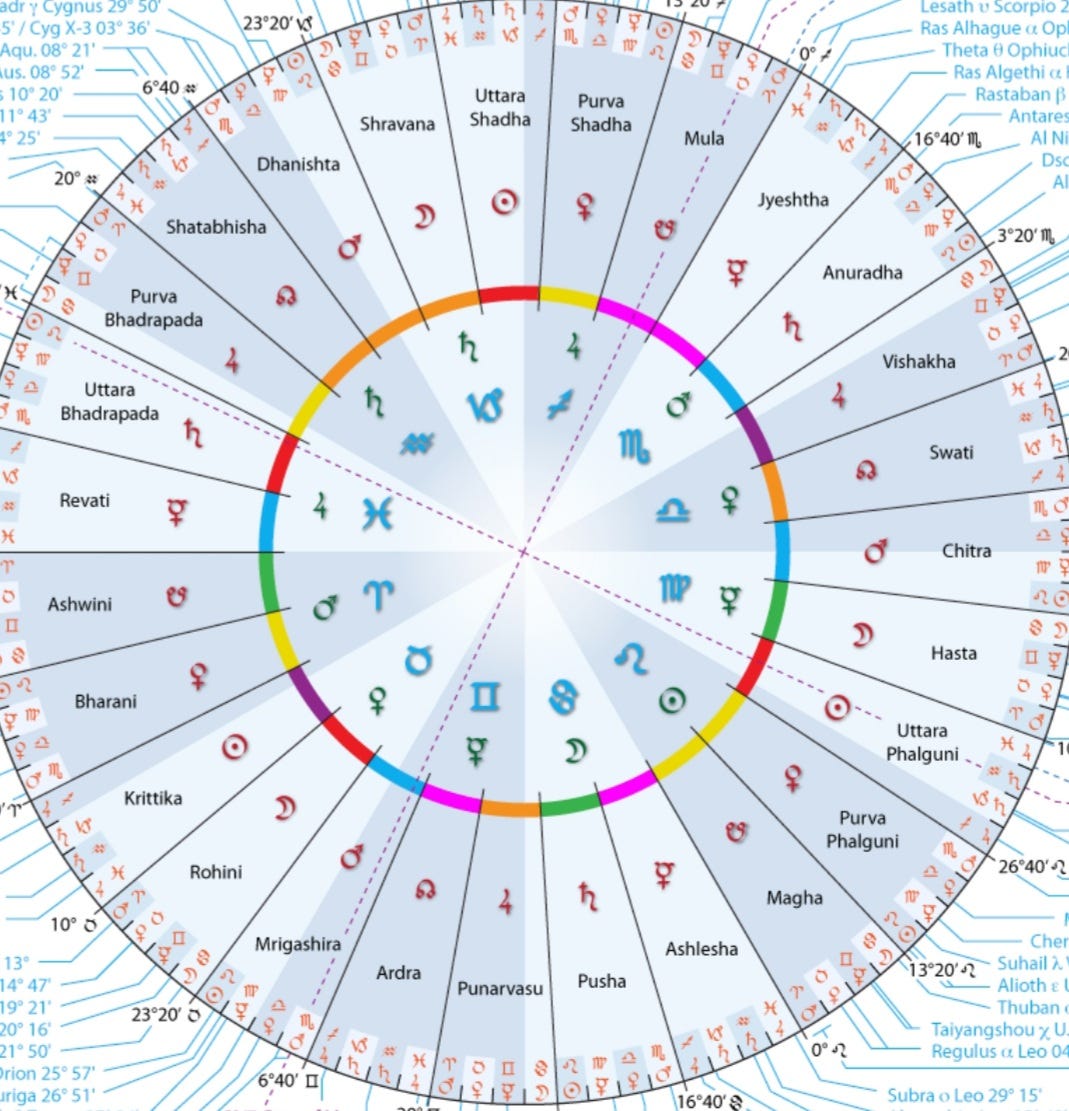
In Vedic Jyotish, a child’s name is traditionally chosen based on their Janma Nakshatra — the lunar mansion (one of the 27 Nakshatras) in which the Moon was placed at the moment of their birth. The first syllable of the name is determined by the specific Nakshatra and its Pada (quarter), creating a name that is literally derived from the person’s lunar position at birth. This name is considered energetically aligned with the individual’s cosmic signature — their birth chart.
In the Sabarimantrika and Shakta tantric traditions within classical Vedic practice, a person’s name (particularly their birth name or Nakshatra-based name) is understood to carry a vibrational resonance that reflects their planetary makeup. The name is, in a sense, a compressed version of the birth chart — a sound that encodes something of the individual’s cosmic identity.
This is the authentic traditional basis for the idea that a name carries spiritual significance. It is a genuinely interesting concept, rooted in the precise astronomical system of the Nakshatras and in the Vedic understanding of sound (Shabda) as a carrier of cosmic meaning.
However — and this is crucial — what this tradition actually supports is the use of a name to:
- Determine the correct mantra seed syllable for a Japa practice related to that person’s Nakshatra
- Identify the ruling deity and planetary lord of the Nakshatra, which can inform the nature of the relationship
- Understand something of the person’s energetic constitution — their Guna (temperament), their Deva/Rakshasa/Manushya classification
What the authentic tradition does not support is the claim that knowing someone’s name alone is sufficient to perform any kind of meaningful astrological intervention on their behalf — let alone to influence their thoughts or feelings from a distance.
What the Authentic Vedic Tradition Says About Photographs
The use of photographs in Vedic ritual practice is a modern development. Photographs did not exist for the vast majority of the Vedic tradition’s history — so there is no classical scriptural basis for their use in the specific way that online Vashikaran practitioners typically describe.
What the classical tradition does discuss — in Yantra Shastra and certain Tantric texts — is the use of symbolic representations of deities and cosmic principles as focal points for meditation and devotion. The Yantra (sacred geometric diagram) functions as a visual representation of a specific planetary or divine energy, helping the practitioner’s mind to focus and align with that energy during practice.
Some modern practitioners extend this principle to suggest that a photograph of a person can serve as a focal point — a way of holding that person in mind during a practice aimed at sending positive energy, cultivating compassion, or strengthening the practitioner’s own loving intention toward them.
This is a far more modest and defensible claim than the typical online advertisement suggests. It is essentially saying: a photograph can help you keep a specific person in mind during a meditation or prayer practice. That is psychologically true and spiritually coherent — it does not require any supernatural claims.
What a photograph absolutely cannot do, within the authentic Vedic framework, is:
- Replace the birth chart as the foundational document for any meaningful astrological analysis
- Allow a practitioner to influence another person’s thoughts or feelings remotely
- Serve as the basis for any specific astrological remedy, since the chart — not the appearance — is what Jyotish reads
Why “Name and Photo” Is the Language of Fraud — Not Classical Jyotish

Having established what the authentic tradition actually says, we can now be direct about why the “send your name and photo” formula is a reliable indicator of fraudulent practice rather than genuine Vedic expertise.
Here is the fundamental issue: a genuine Jyotishi — a qualified Vedic astrologer — cannot perform any meaningful astrological analysis without a birth chart. And a birth chart requires three specific pieces of information:
- Date of birth — the day, month, and year
- Exact time of birth — to the nearest minute if possible
- Place of birth — the specific city or town
Without these three data points, it is impossible to calculate the Ascendant (Lagna), the house cusps, the precise planetary degrees, the current Dasha period, or any of the other chart-specific information that forms the foundation of Vedic astrological analysis.
A name alone reveals — in the traditional framework — only the probable Nakshatra of the Moon’s position, and even that is an inference rather than a certainty (since many names are not given according to the traditional Nakshatra system).
A photograph reveals nothing that is relevant to Vedic astrological analysis. The physical appearance of a person is not part of what Jyotish reads.
So when a practitioner says “give me the name and photo of the person you want to attract and I will perform Vashikaran for you” — they are telling you, clearly and definitively, that what they are offering is not Vedic astrology. They may be offering something — a prayer, a ritual, a psychological reassurance — but they are not offering anything grounded in the classical Jyotish tradition, because classical Jyotish requires the birth chart, not the name and face.
What Genuine Vedic Practice Actually Requires — And Offers

So what does a genuine Vedic astrology consultation for matters of love and relationship actually look like? And what can it legitimately offer?
A genuine consultation begins with your birth chart — the three data points above, drawn up as a precise planetary map of the sky at the moment of your birth. From this chart, a qualified Jyotishi can:
Identify the specific planetary factors affecting your love life — the strength of Venus (Shukra), the condition of the 5th house (romance) and 7th house (marriage), the current Dasha and Bhukti periods, and any relevant planetary afflictions such as Mangal Dosha or Shukra-Shani aspects.
Recommend specific, personalised Vedic remedies — mantras, Upayas, gemstones, Vrata, and Daan — tailored to strengthen the specific planetary energies most relevant to your situation.
Provide timing guidance — identifying the planetary periods and transits most favourable for relationship developments, based on your specific chart.
If the birth chart of the other person in the relationship is also available, a qualified Jyotishi can additionally perform Kundli matching — the classical Vedic compatibility analysis that examines the relationship between two charts across multiple dimensions of compatibility.
None of this requires a photograph. None of it can be done with only a name. All of it requires the birth chart — the actual astrological data — as its foundation.
The Psychological Reality of Name and Photo Practices
There is one honest, psychologically grounded way to understand what happens when someone engages in a practice involving the name or photo of a person they love — and it is worth acknowledging it clearly.

In the psychology of focused intention and loving-kindness meditation — practices with a substantial body of modern research behind them — visualising a specific person while cultivating feelings of love, compassion, and goodwill toward them has measurable effects. Not on the other person directly, but on the practitioner.
People who regularly practise loving-kindness meditation toward a specific individual report:
- Reduced anger, resentment, and emotional reactivity related to that person
- Increased feelings of warmth, forgiveness, and emotional openness
- Greater clarity about the relationship and their own feelings within it
- Improved emotional regulation that positively affects their real-world interactions
A photograph or name can serve as a focal point for this kind of practice — helping the mind stay anchored to a specific person during a meditation session. This is a legitimate, psychologically coherent use of these objects. It has nothing to do with controlling another person’s mind. It has everything to do with cultivating the practitioner’s own inner state.
This is the honest psychological reality that underlies whatever genuine benefit people sometimes report from these practices. The change happens in the practitioner — not in the target.
The Nakshatra Name Connection — A Genuine Vedic Insight

Having been clear about what names and photos cannot do, it is worth elaborating on what the Nakshatra-name connection genuinely offers — because it is one of the more interesting and under-appreciated aspects of Vedic tradition.
In Vedic astrology, the 27 Nakshatras divide the zodiac into lunar mansions of 13°20′ each. Each Nakshatra is ruled by a specific planet, associated with a specific deity, and carries a specific energetic quality. Each Nakshatra is further divided into four Padas, and each Pada is associated with a specific Sanskrit syllable from which the birth name is derived.
So a person named “Karthik” — whose name begins with “Ka” — is likely born under a Nakshatra whose first Pada corresponds to that syllable. From this, a Jyotishi can infer (not confirm, but meaningfully infer):
- The probable birth Nakshatra and its ruling planet
- The associated deity and the mantra most aligned with that person’s cosmic signature
- The energetic temperament (Deva, Manushya, or Rakshasa Gana) of the Nakshatra
This information is genuinely useful — not as a replacement for the birth chart, but as a supplementary insight when the full birth data is unavailable. It represents the authentic traditional basis for name-based inquiry in Vedic astrology.
A qualified Jyotishi who uses a name in this way — as a Nakshatra inference tool — is practising something genuine. A practitioner who uses a name as the sole basis for performing elaborate rituals on someone’s behalf is not.
Practical Guidance — What to Do Instead
If you are in a situation where you feel drawn to seek Vashikaran guidance and you have the name or photograph of someone but not their birth details, here is what the authentic Vedic tradition actually recommends:
Focus on your own chart first. The most meaningful astrological work you can do is understanding the planetary factors in your own birth chart that are affecting your love life. Your chart — and the remedies appropriate to it — is entirely within your control and does not depend on any information about anyone else.
Use what you know about the other person to deepen self-understanding. If you know even the approximate birth month of the other person, a Jyotishi can offer some Nakshatra-based insights. If you know their birth date and approximate time, a full compatibility analysis becomes possible. Each additional data point adds genuine depth.
Engage in loving-kindness meditation using a photograph as a focal point — understanding this as a practice for your own emotional healing and clarity, not as a method of influencing the other person.
Consult a verified, qualified Jyotishi who works from birth charts and classical Vedic texts — and who is transparent about what their practice can and cannot offer.
These trusted platforms connect you with verified Vedic astrologers for free introductory consultations:
- AstroTalk — India’s largest verified Jyotish platform, birth-chart-based consultations 🔗 https://astrotalk.com
- Astroyogi — Trusted since 2001, rigorous Vedic methodology 🔗 https://www.astroyogi.com
- Vama — Certified Jyotish practitioners, Nakshatra and Kundli expertise 🔗 https://vama.app
- Anytime Astro — 24/7 verified Vedic astrology consultations 🔗 https://www.anytimeastro.com
- Ganeshaspeaks — Free question submission with genuine Jyotish response 🔗 https://www.ganeshaspeaks.com
Final Thoughts — Honest Answers Protect Real People
The question “can Vashikaran be done with just a name or photo?” is most often asked by people in genuine emotional pain, seeking any available path toward the connection or reconciliation they desire. They deserve an honest answer — not one calibrated to extract payment.
The honest answer is: in the authentic Vedic astrology tradition, a name carries genuine significance through the Nakshatra system, and a photograph can serve as a meditation focal point for the practitioner’s own inner work. Neither constitutes the basis for meaningful astrological analysis, which requires the birth chart. And neither has any classical support as a tool for influencing another person’s thoughts, feelings, or choices from a distance.
What the tradition does offer — consistently, across thousands of years of practice — is something more valuable than remote influence: a path of genuine inner transformation that makes the practitioner more loving, more grounded, more emotionally clear, and more genuinely attractive to the right person.
That path begins with your own birth chart. Not someone else’s photograph.
Keywords: can Vashikaran be done with name and photo, Vashikaran using name only, photo Vashikaran real or fake, Vedic astrology name significance, Nakshatra name astrology, is photo Vashikaran genuine, how does Vashikaran work Vedic, birth chart Vedic astrology love