

Vedic Astrology & Tantra Shastra
According to Vedic astrology and Tantra Shastra, Vashikaran is an ancient Sanskrit term meaning to attract, control, or influence another being through specific mantras, yantras, and rituals. While it is discussed in classical texts such as the Atharva Veda, it is considered a double-edged practice — one that, when misused, is believed to carry serious mental, spiritual, and karmic consequences for all parties involved.
In the vast ocean of Vedic wisdom, few subjects stir as much curiosity — and caution — as Vashikaran. The word itself is derived from the Sanskrit roots Vashi (to attract or bring under one’s influence) and Karan (the method or act of doing so). Ancient Vedic texts, particularly the Atharva Veda, contain references to rituals and mantras that were believed to influence a person’s consciousness. However, these texts also carry explicit warnings about the ethical use — and misuse — of such powerful practices.
In this article, we explore the side effects of Vashikaran specifically on the human mind, as understood through the lens of Vedic astrology and Tantra Shastra. This is not an endorsement or promotion of the practice; rather, it is an educational overview of what these ancient texts say about the psychological and spiritual consequences when Vashikaran is performed — whether on the subject or the practitioner.
Vedic astrology (Jyotish Shastra) forms the foundation from which Vashikaran practices are interpreted and assessed.
Understanding Vashikaran in the Vedic Framework
Vashikaran is categorized under Tantra Shastra — the mystical branch of Vedic knowledge. According to classical texts, the cosmos is composed of subtle energies, and human consciousness is deeply connected to these energies. The mind, governed by the Moon (Chandra) in Vedic astrology, is considered highly sensitive to external influences, including vibrational forces generated through mantras and rituals.
Ancient scholars divided Vashikaran broadly into two categories:
- Sattvic (Pure) Vashikaran — Performed with righteous intent, such as attracting blessings, strengthening family bonds, or helping a lost soul return to a righteous path. This form is described in texts as aligned with dharma.
- Tamasic (Dark) Vashikaran — Performed with selfish or harmful intent, such as forcing another person’s will, disrupting relationships, or gaining material control over someone. Vedic texts strongly warn against this path.
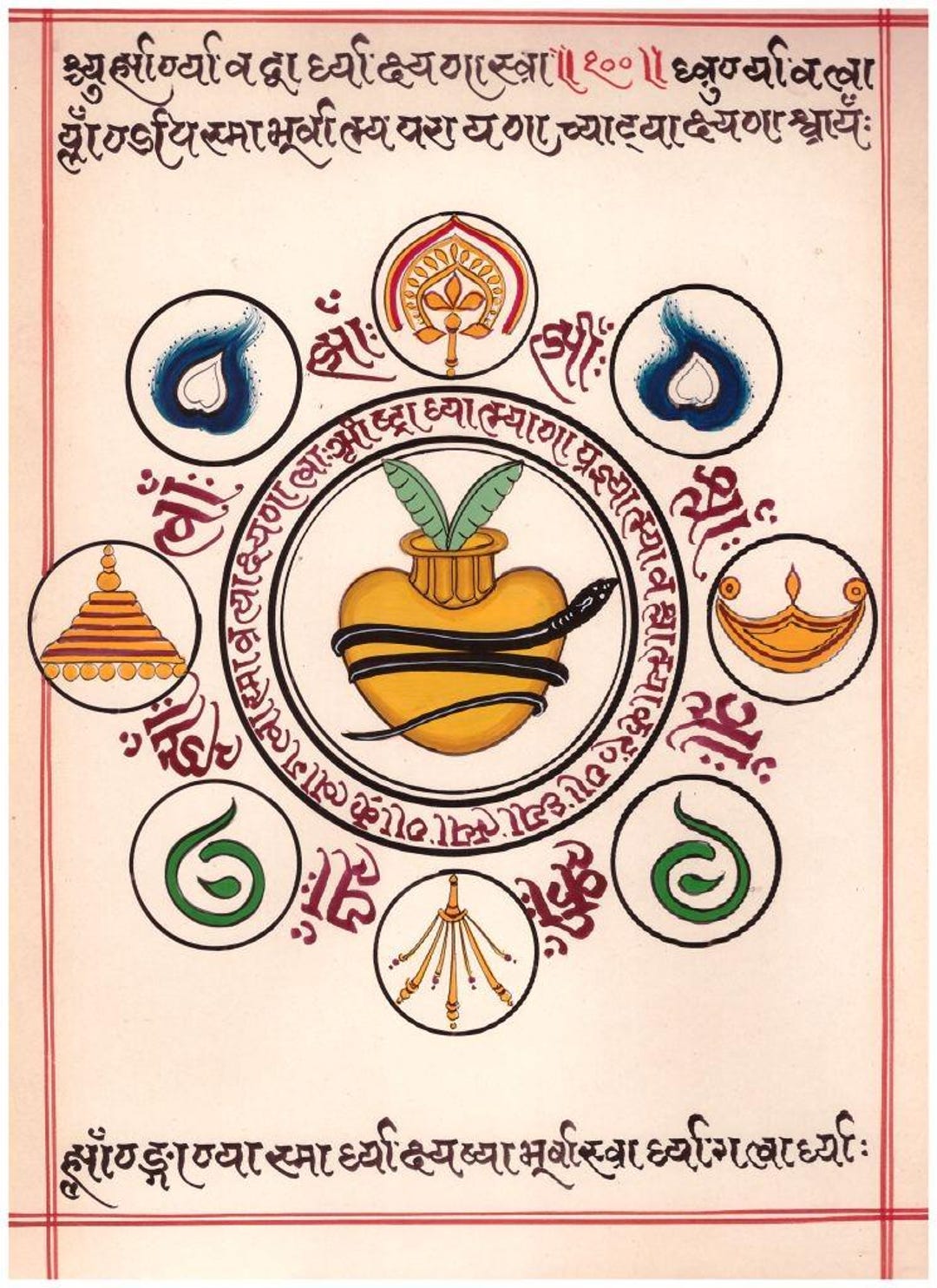
The Sri Yantra is one of the most sacred geometric tools in Vedic Tantra, representing cosmic energy and consciousness.
Side Effects of Vashikaran on the Target Person’s Mind
According to Vedic astrology, the Moon (Chandra) rules the mind (manas). Any interference with a person’s free will through Tamasic Vashikaran is believed to disturb the natural flow of lunar energy in their birth chart, creating a range of mental disturbances described in classical texts.
1. Mental Confusion and Loss of Clarity
Classical Tantra texts describe that a person subjected to Vashikaran may begin to experience persistent mental fog. Their ability to make independent decisions gradually weakens. According to Jyotish Shastra, when the mind’s natural lunar energy is disturbed by external vibrational interference, rational thought patterns break down — leading to confusion, indecisiveness, and difficulty concentrating on daily tasks.
2. Emotional Imbalance and Mood Swings
Vedic astrology associates emotional stability with a strong, unafflicted Moon in the natal chart. Tantric texts suggest that unwanted Vashikaran can disturb this stability, manifesting as sudden mood swings, unexplained sadness, irritability, or emotional sensitivity without an obvious external cause. The person may find themselves feeling overwhelmed by emotions they cannot explain or trace back to a specific life event.

In Vedic thought, human consciousness is surrounded by layers of energy. Disruption of these layers is said to affect mental and emotional health.
3. Sleep Disturbances and Vivid Dreams
Ancient Tantra Shastra texts specifically mention that a person influenced by Vashikaran may experience disturbed sleep patterns. Dreams become unusually vivid or disturbing. This is connected to the concept of the sukshma sharira (subtle body) being affected. Vedic astrology links the 12th house (house of sleep) to the subconscious mind, and any interference with subtle energy fields is said to directly impact this domain.
4. Detachment from Reality
In extreme cases described in Tantric literature, a person heavily influenced by Tamasic Vashikaran may gradually become disconnected from their surroundings, relationships, and sense of self. This parallels what Vedic texts describe as the weakening of the Ahamkara (ego-identity) — the individual’s natural sense of “I am.” Without this anchor, a person can drift into a dreamlike, disoriented state of consciousness.
“A mind disturbed by external forces loses its capacity to perceive the truth of dharma. Such a mind wanders like a leaf in a storm — tossed without direction.”— Paraphrased from concepts in the Atharva Veda Tantra tradition
5. Unexplained Anxiety and Fear
Vedic astrologers note that when the 4th house (house of inner peace, governed by the Moon’s influence on mental contentment) is disturbed through external energetic interference, a person may develop a persistent, free-floating anxiety — a sense of unease without a clear reason. Ancient texts describe this as the manas being out of alignment with its natural cosmic rhythm.

Sacred fire rituals (Havan/Homa) are central to Vedic and Tantric practice. Misuse of such powerful rituals is believed to carry consequences.
Side Effects on the Practitioner’s Mind
Vedic astrology’s karmic framework makes clear that actions performed with impure intent do not leave the practitioner unaffected. The effects on the one who performs Tamasic Vashikaran are, according to these texts, often more severe than those experienced by the target.
| Effect on Practitioner | Vedic / Tantric Explanation |
|---|---|
| Karmic Debt Accumulation | Interfering with another’s free will creates heavy karma that must be balanced in future lives, according to the law of karma in Vedic philosophy. |
| Mental Restlessness | The practitioner’s own Moon and Mercury (mind and intellect) are believed to become progressively agitated as negative energy is generated. |
| Spiritual Regression | Tantric texts warn that Tamasic practices close the practitioner’s higher chakras, particularly the Ajna (third eye) and Sahasrara (crown), hindering spiritual evolution. |
| Loss of Positive Aura | The practitioner’s natural protective aura (Tejas) is said to diminish, making them more vulnerable to negative energies and mental disturbances. |
| Paranoia and Suspicion | Classical texts note that those who attempt to control others through such means develop a deeply suspicious nature, fearing that others may do the same to them. |
The Role of Planetary Positions in Vulnerability
According to Vedic astrology, not every person is equally susceptible to external energetic influences. The strength and placement of certain planets in one’s birth chart determine how vulnerable or resilient a person may be.

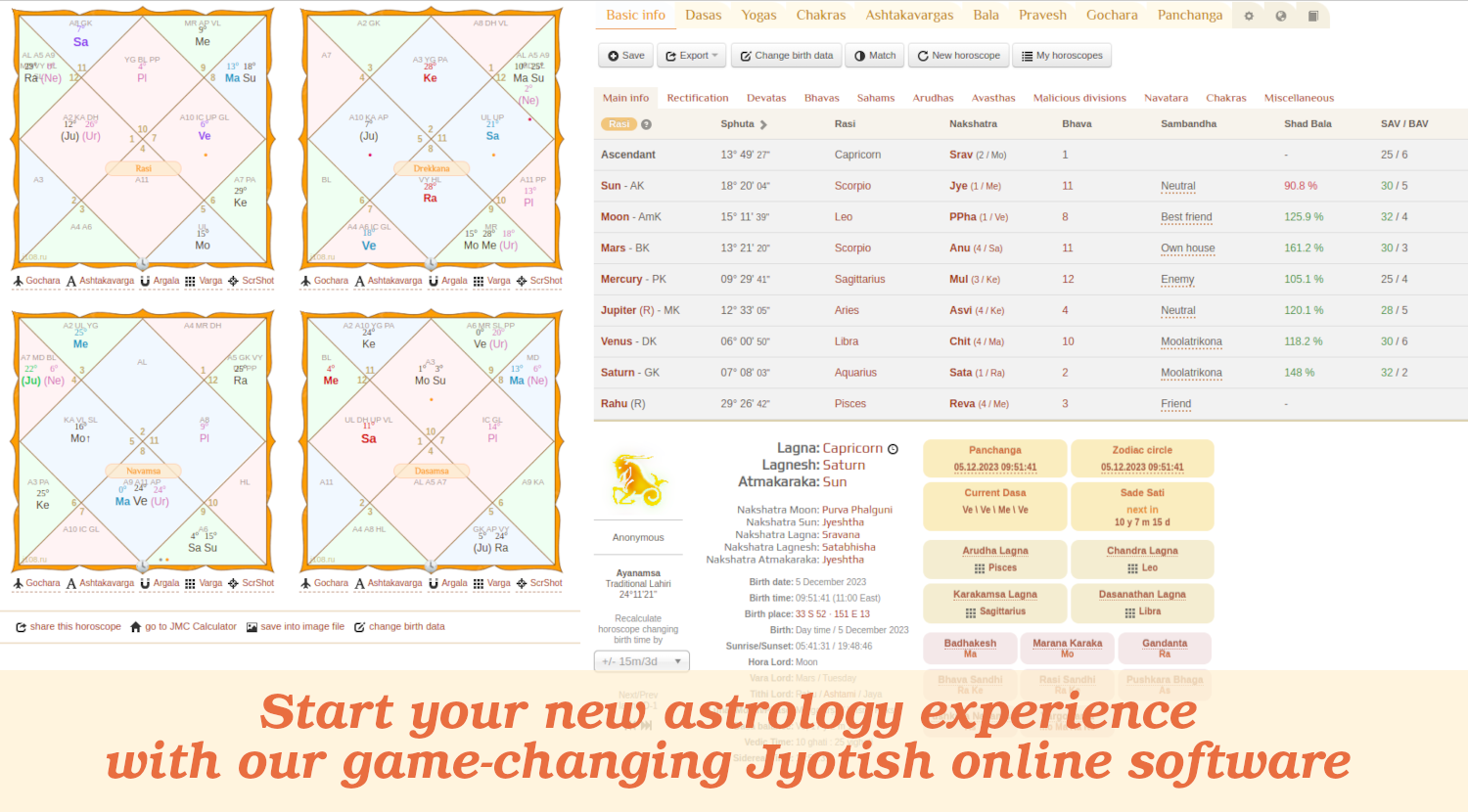
A Vedic (Jyotish) birth chart reveals planetary positions that determine one’s mental resilience and spiritual protection, according to classical astrology.
Key planetary indicators discussed in classical Vedic texts include:
- A weakened or afflicted Moon — Makes the mind more susceptible to emotional and psychological disturbances, including external vibrational influences.
- Rahu’s influence on the Moon or the 4th house — Rahu (the North Node) is associated with illusion, obsession, and confusion. Its affliction on the Moon is considered a major factor in mental vulnerability in Vedic astrology.
- Weak Mercury (Budha) — Mercury governs rational thinking and communication. A weak Mercury reduces the person’s capacity to detect and resist subtle influences.
- Saturn’s conjunction with the Moon — Known in Vedic astrology as Vish Yoga, this placement is said to create chronic mental heaviness, sadness, and vulnerability to negative external forces.
🪔 Vedic Reminder
Vedic astrology emphasizes that the best protection against all forms of negative energy — including the purported influence of Vashikaran — is the regular chanting of protective mantras, performance of Sattvic practices (such as meditation, worship, and charitable deeds), and living in alignment with dharma (righteous conduct).
Long-Term Mental Effects as Described in Tantric Texts
Tantric scholars who wrote on the ethics of esoteric practice were clear: prolonged exposure to Tamasic Vashikaran — whether as the target or the practitioner — leads to deep and lasting imprints on the consciousness. In Vedic philosophy, the mind accumulates samskaras (mental impressions), and negative impressions created through such experiences are considered particularly difficult to dissolve.
Weakening of Willpower (Iccha Shakti)
One of the most consistently mentioned consequences in Tantric texts is the erosion of Iccha Shakti — the power of individual will. A person subjected to repeated attempts to override their will is described as becoming progressively passive, unable to assert themselves, and overly dependent on external validation or direction.
Disturbance of the Subconscious (Chitta)
Vedic philosophy describes the mind as consisting of four components: Manas (sensory mind), Buddhi (intellect), Chitta (subconscious memory), and Ahamkara (ego). Tantric texts note that Vashikaran’s primary point of entry is through the Chitta — the subconscious layer — which stores all past experiences and patterns. Disruption at this level is said to surface as unexplained behavioral changes, compulsive tendencies, or deeply rooted emotional blocks.
Karma — the cosmic law of cause and effect — is central to understanding why Vedic texts discourage the misuse of Vashikaran.
Protective Remedies Mentioned in Vedic Texts
Vedic astrology and Tantra Shastra do not leave one without recourse. Ancient texts prescribe several protective and remedial measures believed to strengthen the mind and shield it from negative external influences:
- Chanting the Mahamrityunjaya Mantra — Considered one of the most powerful protective mantras in the Vedic tradition, believed to create a protective shield around the individual’s consciousness and strengthen the Moon’s energy.
- Wearing a Pearl (Moti) — Associated with the Moon in Vedic astrology, a natural pearl worn on the little finger of the right hand is said to strengthen lunar energy and enhance mental clarity and emotional balance.
- Performing Chandra Puja — Regular worship of the Moon deity, particularly on Mondays and during full moon nights, is prescribed in classical texts to stabilize the mind.
- Reciting Hanuman Chalisa — Devotion to Lord Hanuman is widely considered in the Vedic tradition to be a powerful shield against Tamasic energies and external influences.
- Keeping a Rudraksha mala — The five-faced Rudraksha bead is associated in Vedic texts with the calming of the mind and protection from negative vibrational influences.
- Seeking guidance from a qualified Vedic astrologer — Consulting a knowledgeable Jyotishi to analyze one’s birth chart and prescribe personalized remedies based on planetary positions is strongly recommended in classical traditions.
Ancient Sanskrit manuscripts contain both the knowledge of powerful Vedic practices and the ethical guidelines that govern their use.
Frequently Asked Questions
Q1. Is Vashikaran considered a sin in Vedic astrology?
Vedic philosophy does not use the exact concept of “sin” in the way Abrahamic religions do, but it does operate on the law of karma. Using Vashikaran with harmful or selfish intent is considered a Tamasic action that generates heavy karmic burden. Texts such as the Atharva Veda strongly discourage the use of any practice that overrides another being’s free will, as it is considered a violation of dharma.
Q2. Can Vashikaran be reversed or its effects removed?
Classical Vedic and Tantric texts do describe counter-practices known as Vashikaran Nivaran (removal of Vashikaran influence). These typically involve specific mantras, fire rituals (havan), and gemstone therapies prescribed according to the individual’s birth chart. A qualified Vedic astrologer or Tantric scholar would assess the situation and recommend appropriate remedies.
Q3. How does Vedic astrology explain the mechanism of Vashikaran on the mind?
According to Vedic astrology, the universe operates through subtle energy fields. Mantras are believed to generate specific vibrational frequencies that can interact with a person’s planetary energy fields. When a person’s Moon (mind) or Mercury (intellect) is weak in their natal chart, they are considered more susceptible to such external vibrational influences, as these planets provide mental resilience and clarity.
Q4. What is the difference between Vashikaran and black magic (Kala Jadu)?
In the Vedic framework, Vashikaran and Kala Jadu (black magic) are distinct practices. Vashikaran specifically refers to attracting or influencing someone through prescribed mantras and rituals from the Tantric tradition, while Kala Jadu refers more broadly to harmful occult practices. Both, when used with malicious intent, are classified as Tamasic and are warned against in classical texts.
Final Thoughts
Vedic astrology and Tantra Shastra present Vashikaran as a deeply complex and powerful dimension of ancient Indian knowledge. Like all powerful tools, its effects depend entirely on intent and method. The classical texts are unambiguous: any attempt to override another person’s free will through Tamasic practices is believed to disturb the mind at its deepest level — creating confusion, emotional imbalance, spiritual regression, and karmic consequences that ripple across lifetimes.
The true wisdom of Vedic astrology lies not in seeking control over others, but in understanding and harmonizing with the cosmic laws of karma and dharma. The greatest form of Vashikaran, ancient sages remind us, is the power to attract goodness through virtue, compassion, and righteous living.
Disclaimer: This article is intended purely for educational and informational purposes, presenting concepts from Vedic astrology and Tantra Shastra as found in classical texts. The content does not promote, endorse, or encourage the practice of Vashikaran in any form. Readers are advised to consult qualified professionals for any personal, mental health, or spiritual concerns. The views expressed here are based solely on traditional Vedic and Tantric literature.